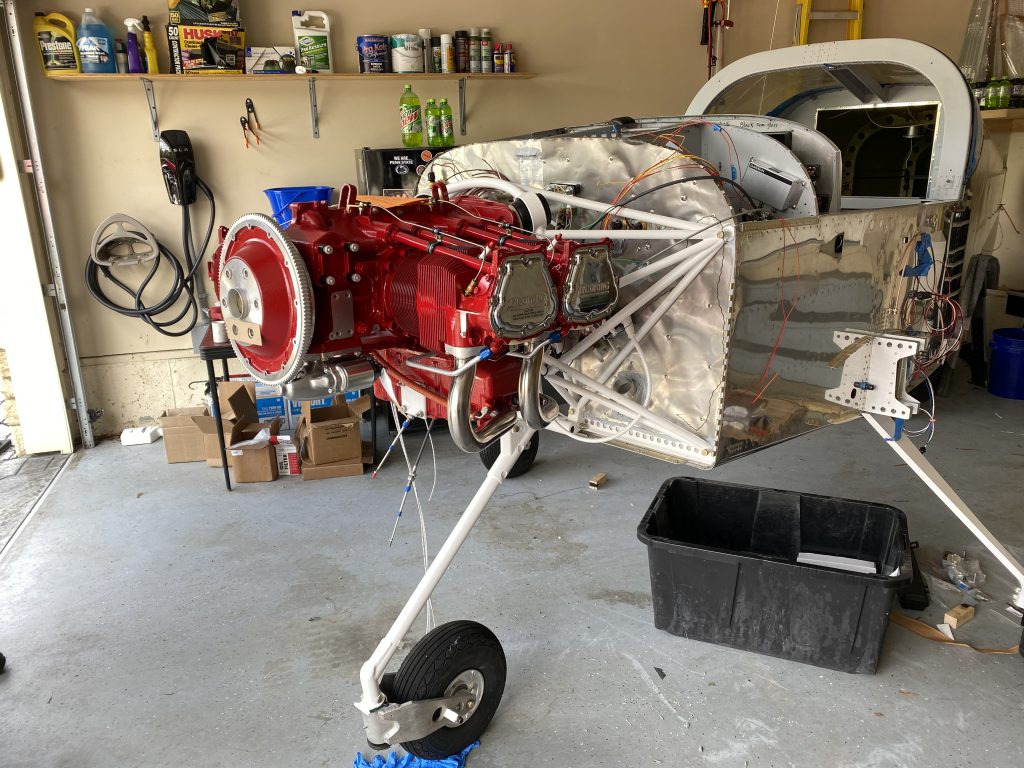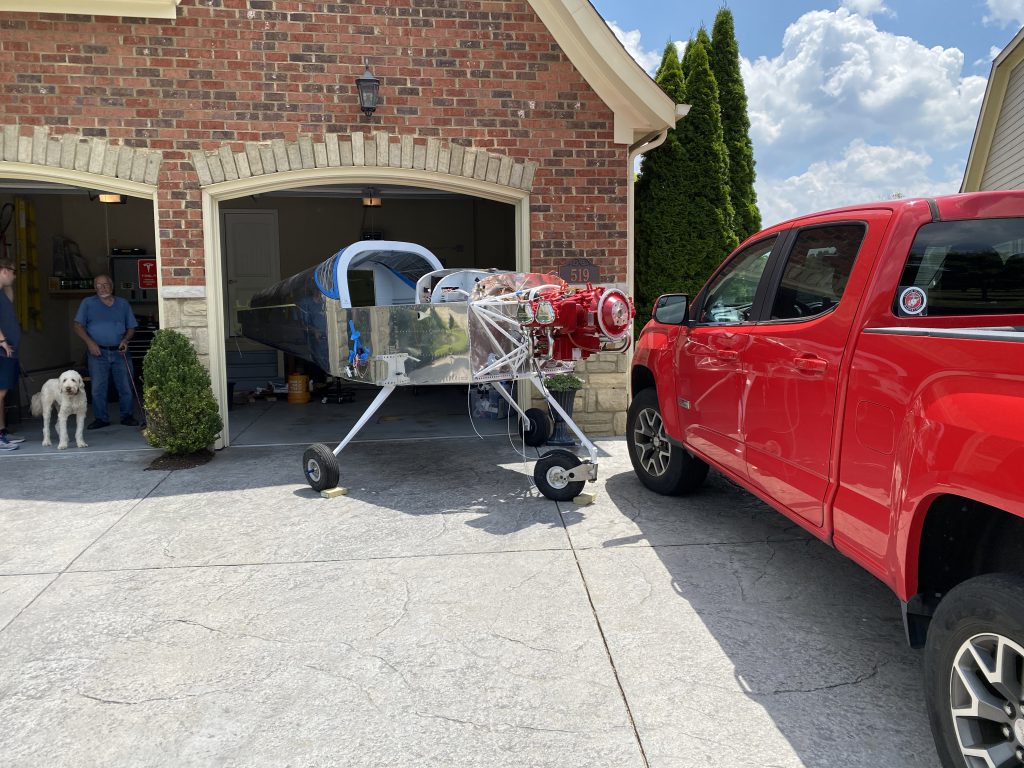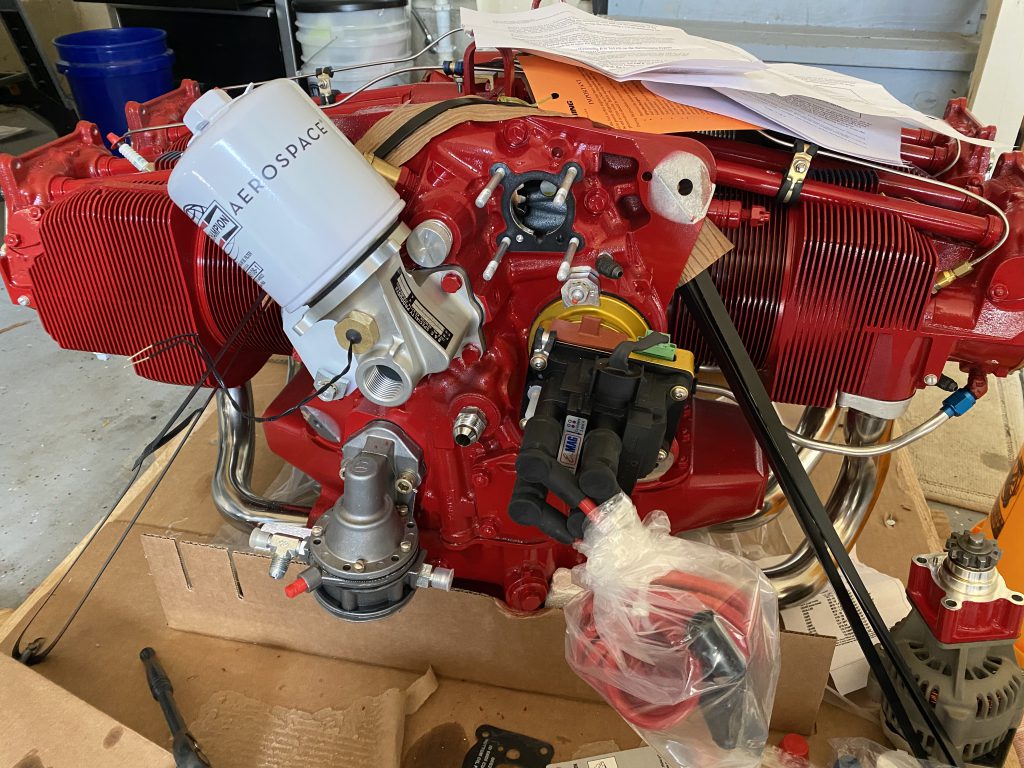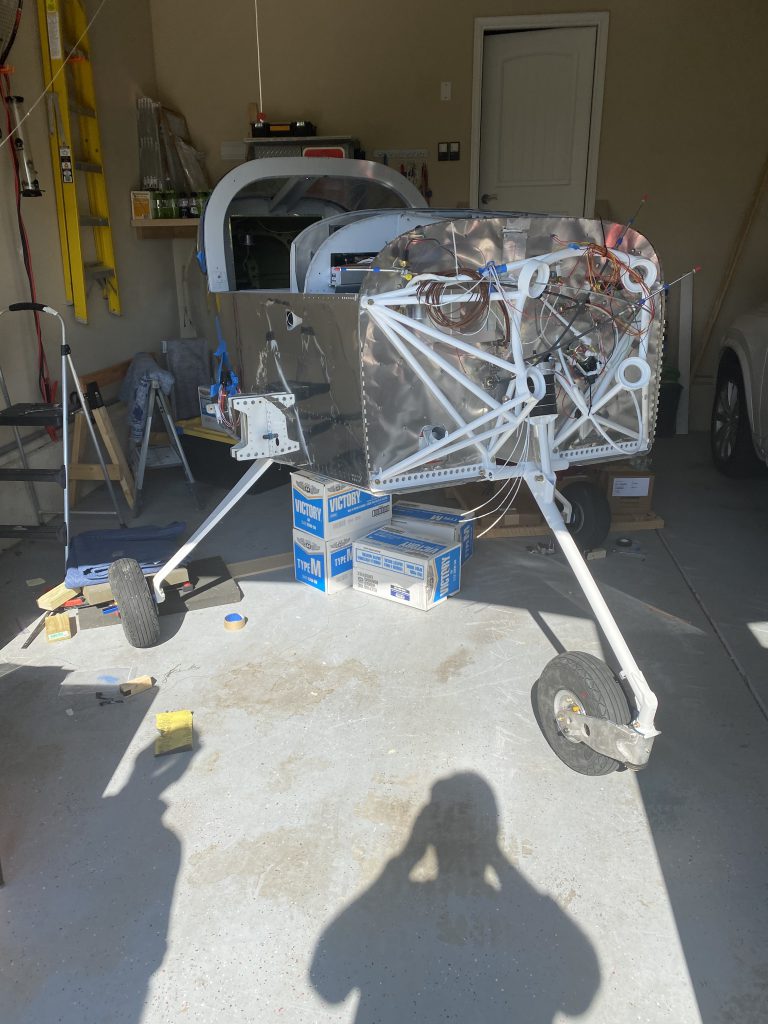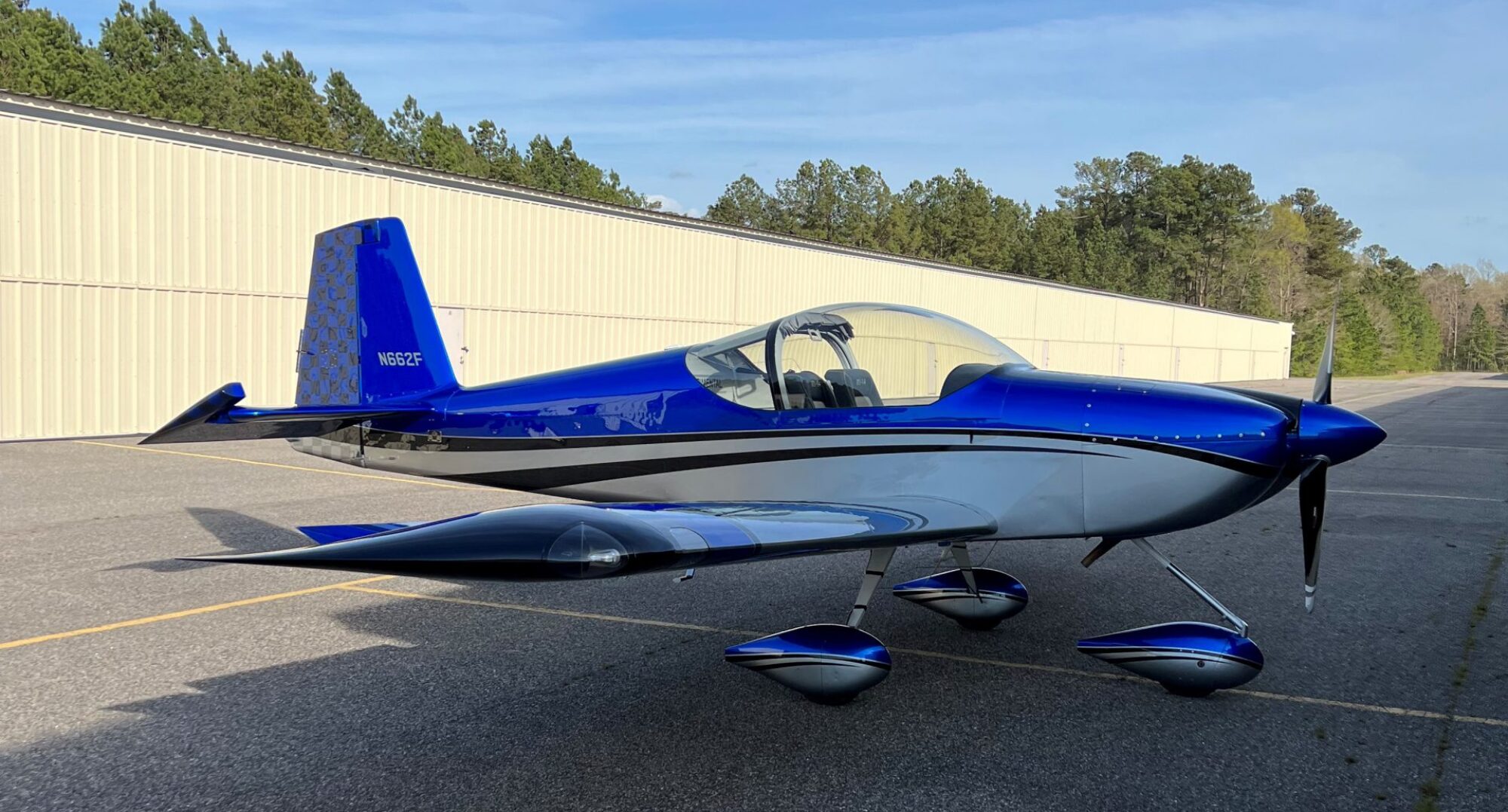
Canopy Install Continued

How to give yourself a heart attack in one easy step…

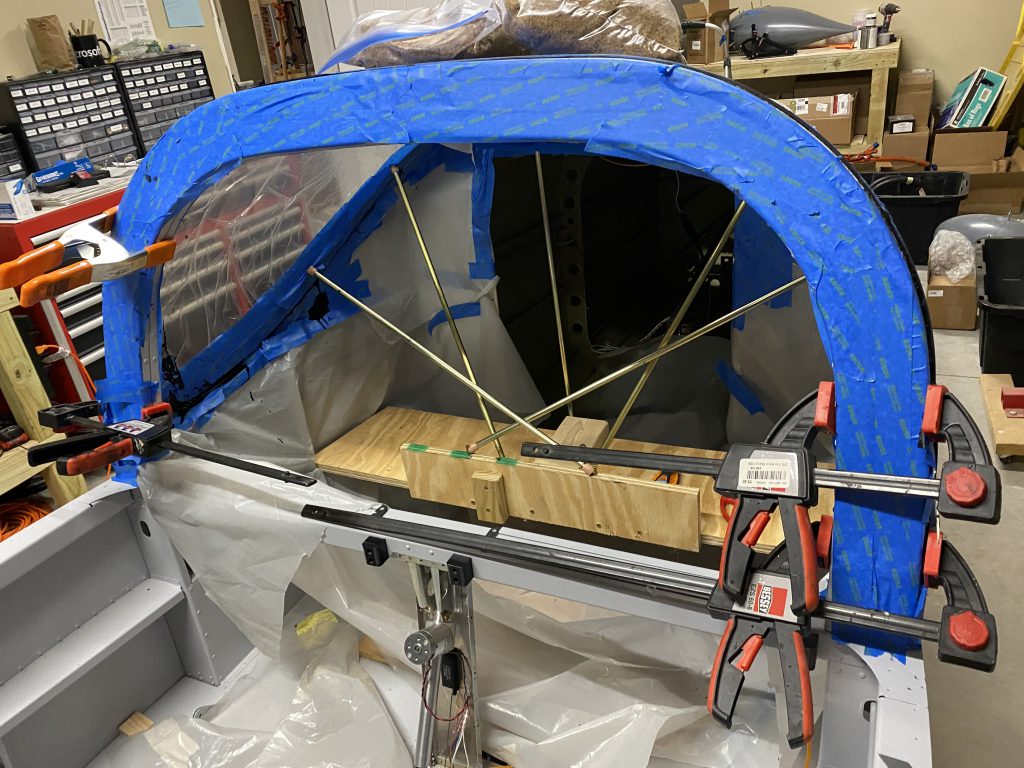
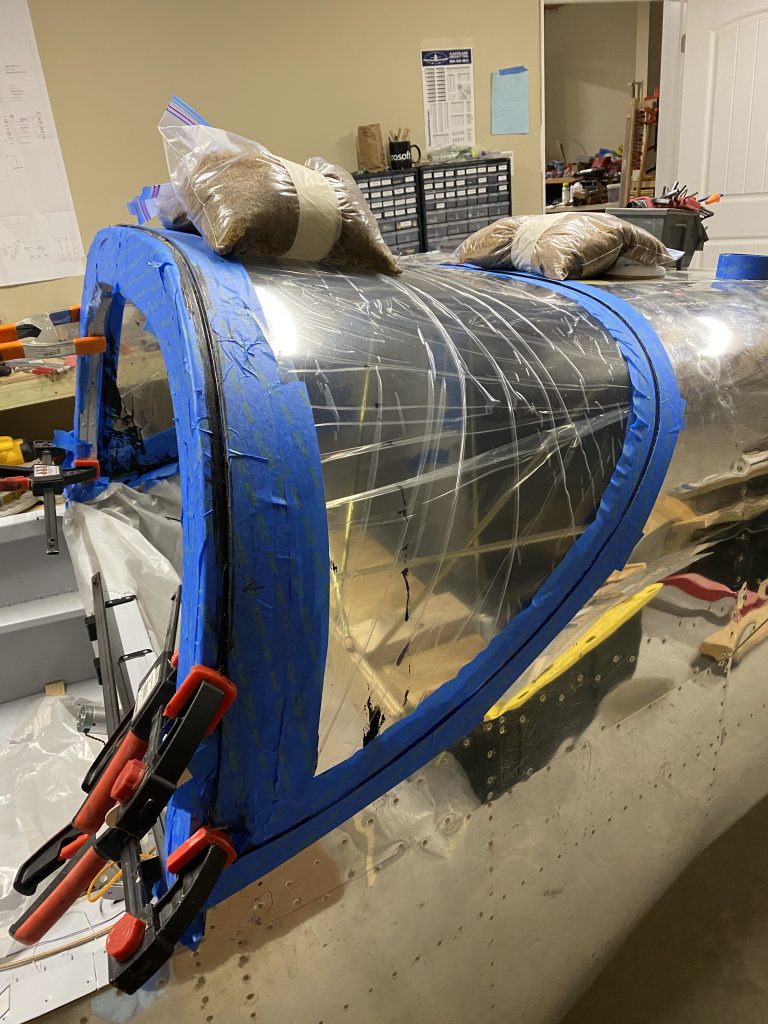
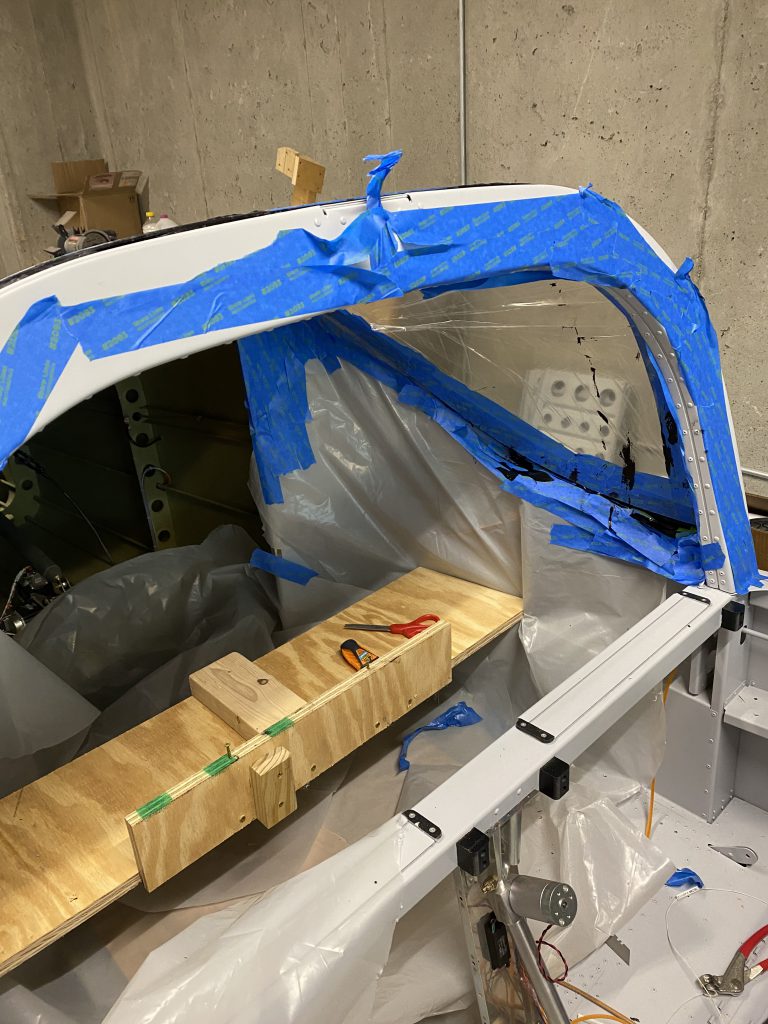
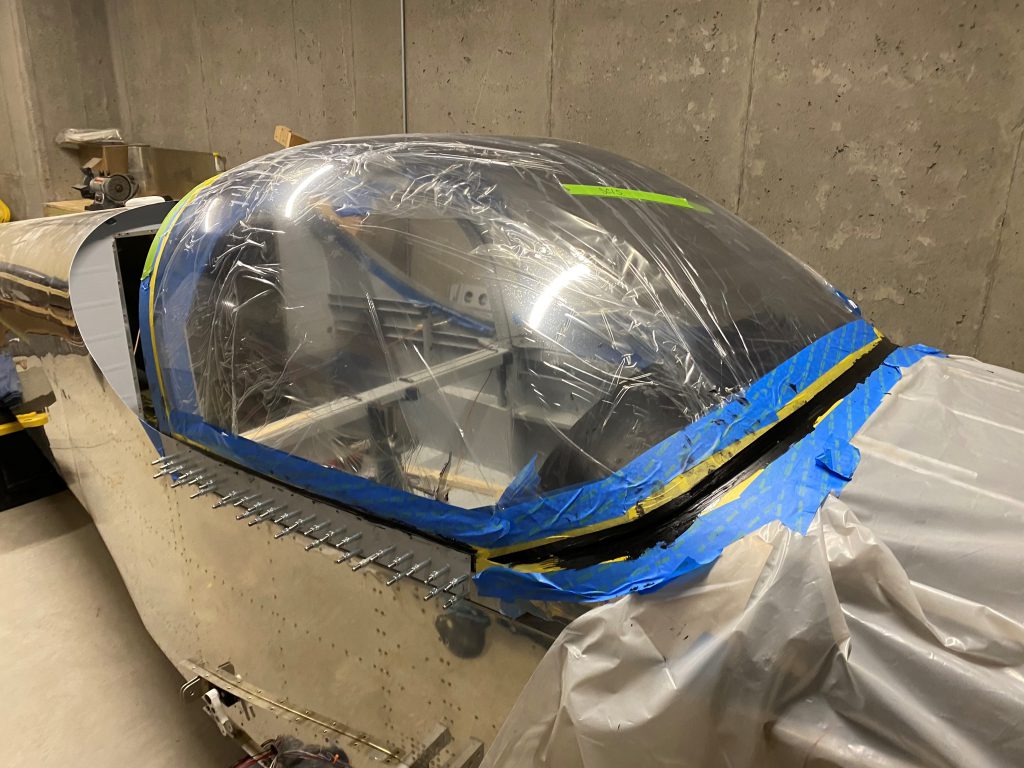
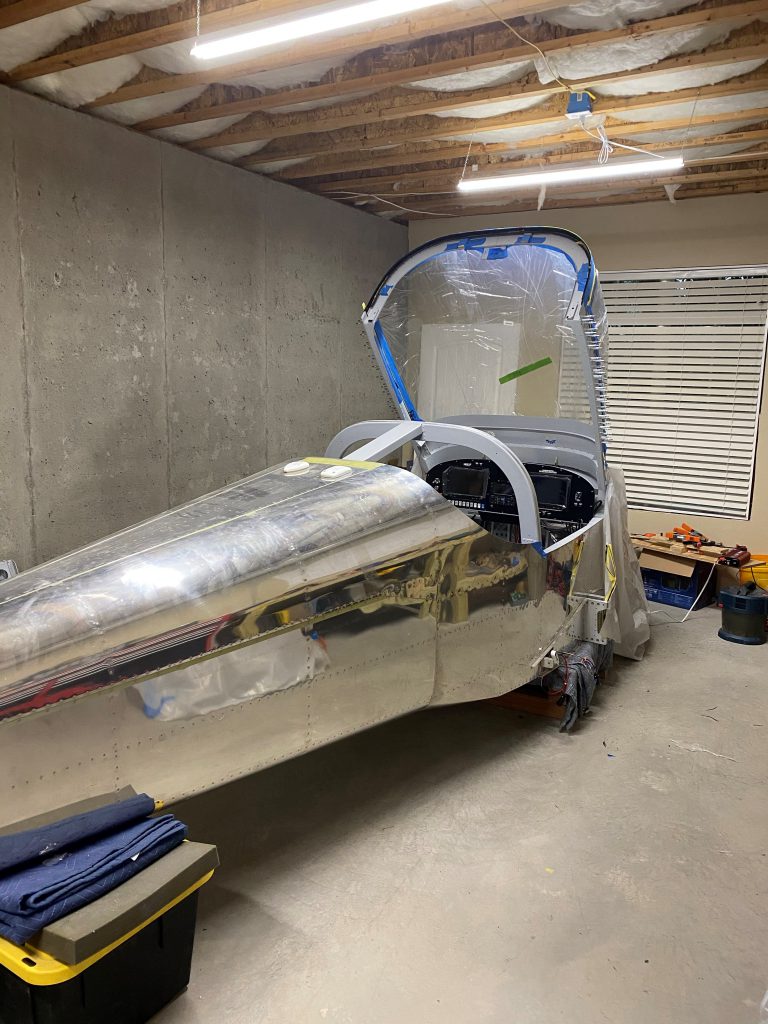
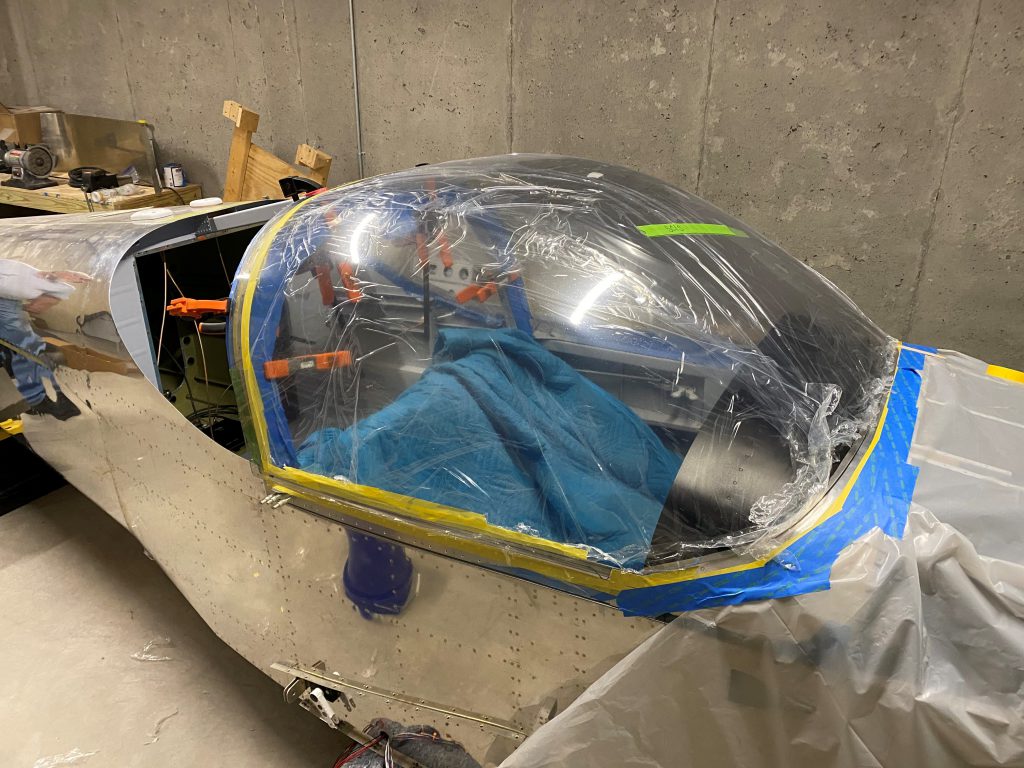
I came down to the workshop about 24 hours after we glued the canopy on. I removed the sandbags and unlatched the canopy. It wouldn’t move at all! I thought that I must have somehow glued the canopy shut accidentally. I envisioned major rework and lots of $$. Luckily, the problem was that I hadn’t loosened the clamps that I was using to secure the canopy to the roll bar. Once I removed them, the canopy opened with only a small amount of persuasion.

The canopy is incredibly solid when it is all connected together. According to others who have older planes (RV6/7 etc.) this canopy is night and day different from the older ones (which had a lot of flex in their canopies).

Overall, I would definitely do Sikaflex rather than screws for the canopy. It is messy and probably costs a bit more, but I believe it is a much better way to go.

Quick tip #1: There is very little room between the windshield and the top of the panel. Make sure to remove any masking tape on the windshield and the top of the panel there before installing. If you don’t, it is a real PITA to get all the tape out of there.

Quick tip #2: Wear gloves – the primer and the Sikaflex do not come off your hands after it dries. I expect my hands will have black stuff on them for several days until it eventually wears off.

Sikaflex-ing the Canopy

Jon and I decided to use SikaFlex (glue) to attach the plexi-glass for the canopy and the back window. The process is a bit more difficult than the Van’s method of using screws. We didn’t like creating a stress riser at each of thirty plus holes in the plexi-glass.

The process is :

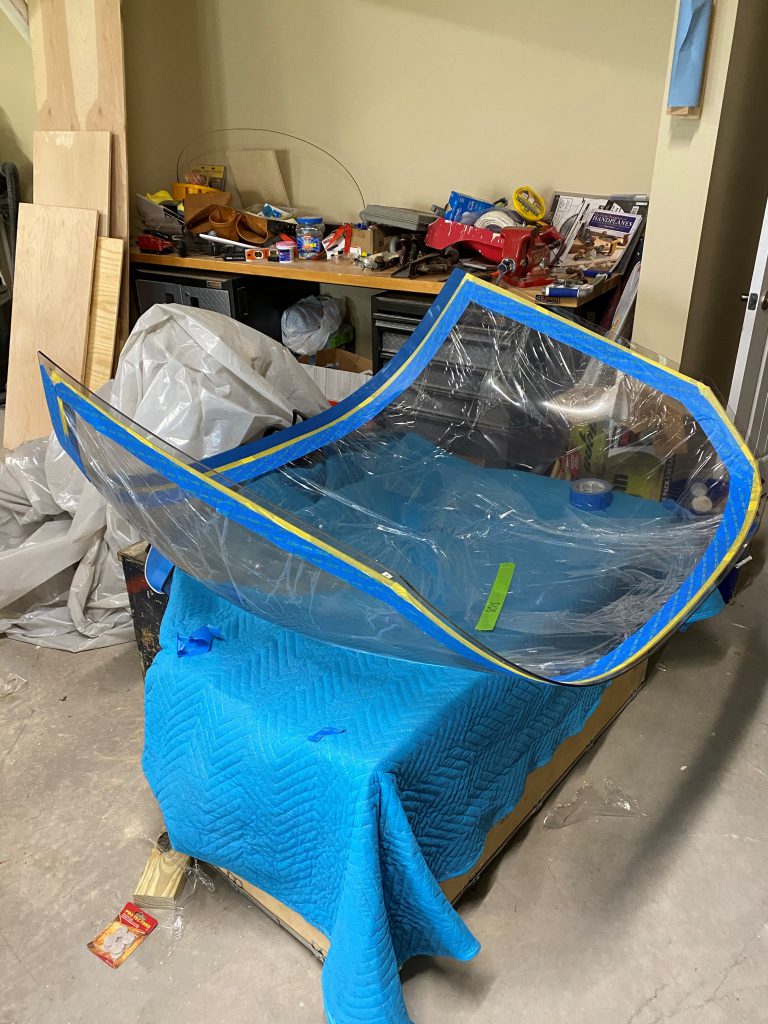
  1. Mask off everywhere you don’t want the primer to end up.
  2. Lightly scuff both surfaces (plexi glass with scotchbrite and aluminum with 220 grit sand paper)
  3. Apply Sikaflex 205 Activator (which seems to be roughly isopropyl alcohol) and let dry 10+ minutes.
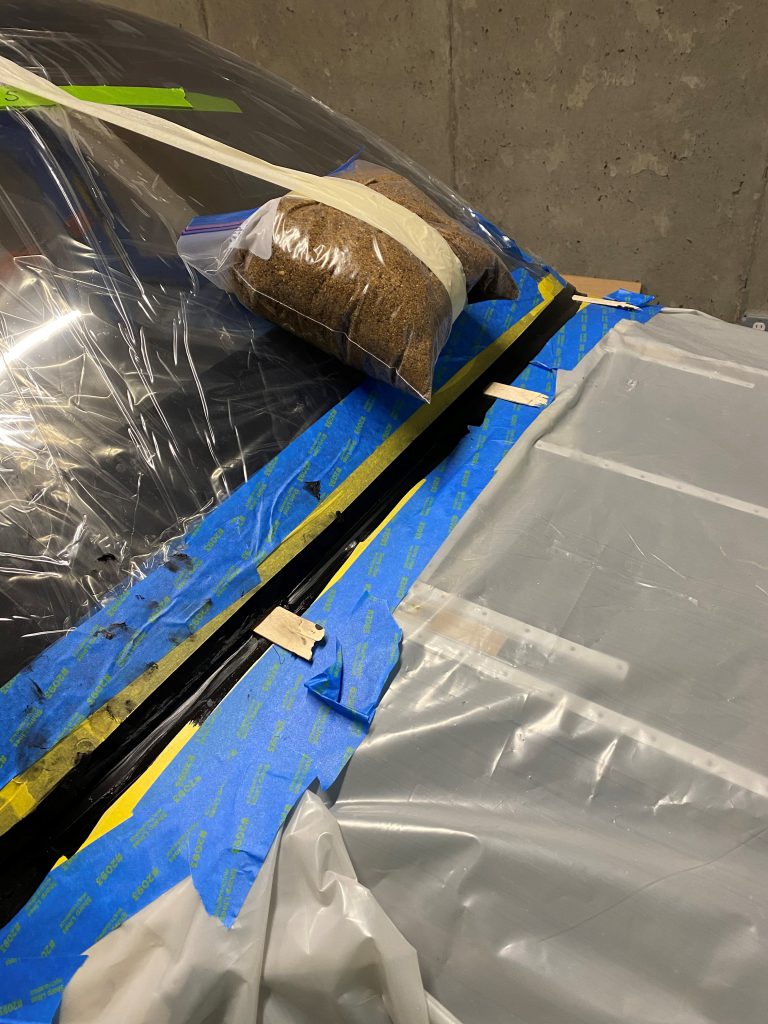
  4. Create stand offs to prevent the plexi-glass from squeezing the glue out. I used tongue depressors for the front and rear and fishing line glued onto the sides.
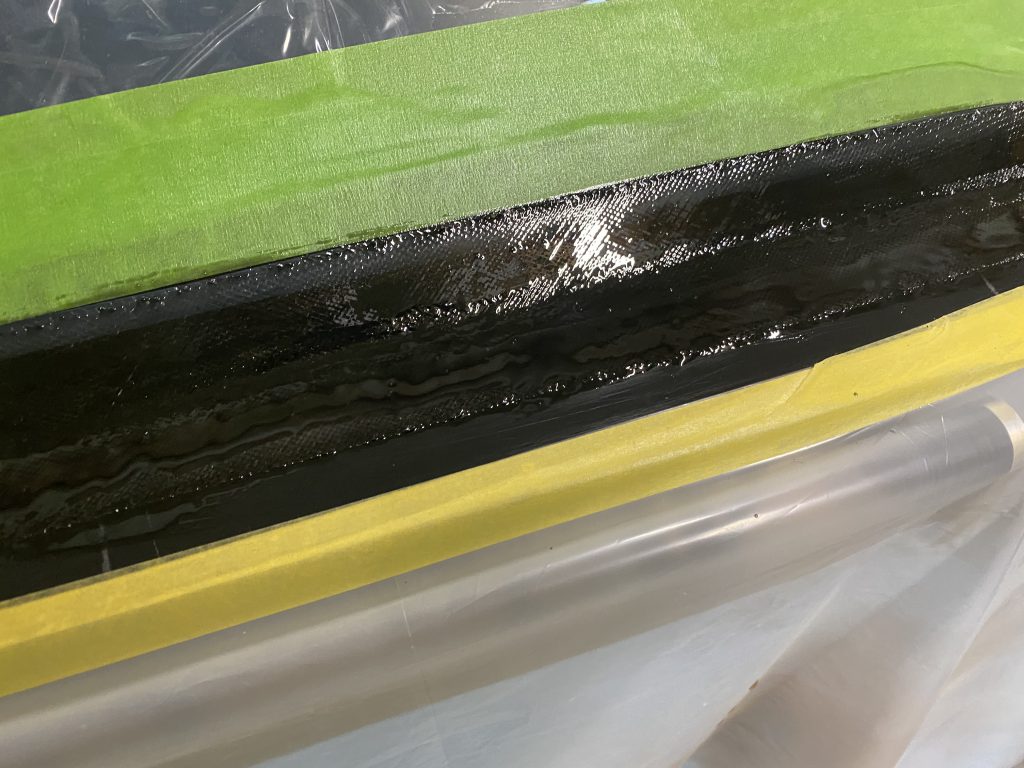
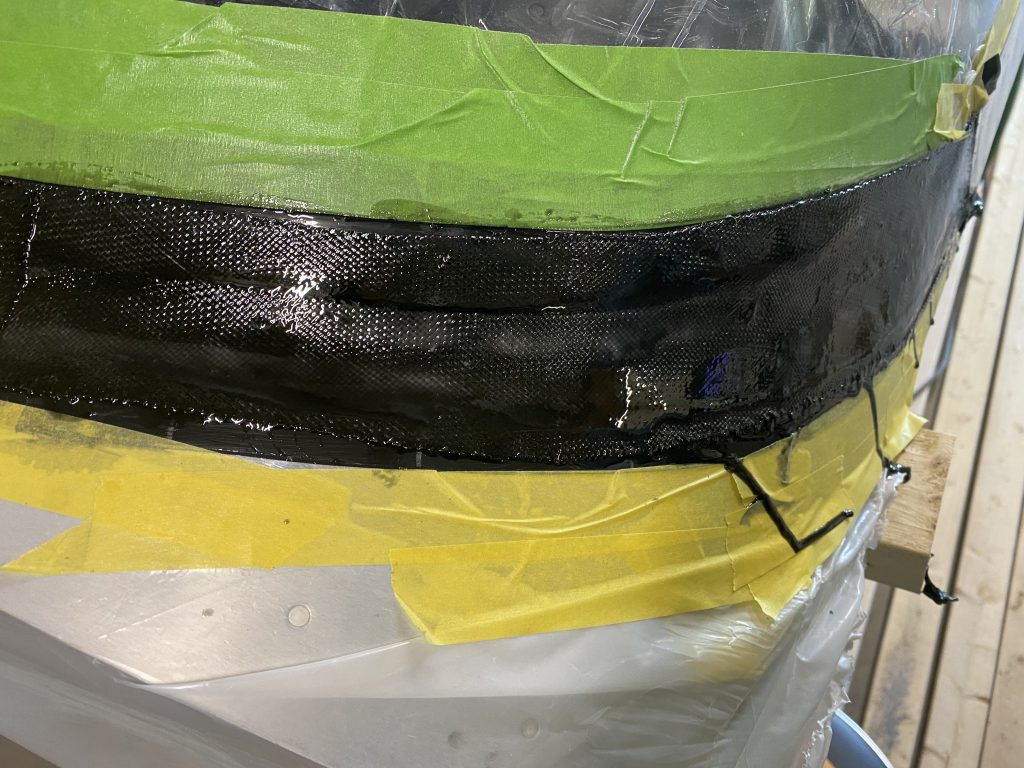
  5. Apply Sikaflex 206G+P primer to both the plexi-glass and the airplane body. This stuff is very thin and can easily run. Thus the reason to mask EVERYTHING. It looks like alcohol will remove primer if necessary.
  6. Apply a bead of Sikaflex 295 UV to the metal surfaces. It is important to cut the tip of the tube properly and to build a small pyramid of glue.
  7. Lower the canopy onto the frame and weight it down with sandbags. I also installed the side skirts to keep the sides of the plexiglass tightly against the glue.
  8. Wait 24 hours.
  9. Remove the tongue depressors and add some additional Sikaflex to fill the holes and make a smooth fillet around the front of the canopy.
  10. Add the side skirts using the same process (remember to have the wire for the canopy open switch in place).

Panel on the Home Stretch (hopefully)

We continued to work on the panel yesterday.

We got the pitot and static system hooked up.

We finished the pitch and yaw trim position wiring.

We found a couple small issues including no ground wire for the USB port (fixed)

A talk with Stein corrected a misunderstanding that I had. I thought the GDL-51A provided a GPS signal to the PFD and MFD, in fact it is the other way around the GDL-51A gets a GPS position from the PFD via the RS-232 connection. This will require one more coax cable from the PFD to the antenna mounted just aft of the baggage compartment.

The Can Bus is Live!

Because the wings are stored in a hanger about 80 miles from here I can’t test the roll servo. This servo is part of the Can Bus which interconnects many of the avionics components including the MFD, PFD, autopilot, radios etc. I was able to test most of the other components by putting a 120 ohm terminator pig tail on to the can bus at the right wing root. The result is that most of the red Xs are gone.

Still a bit of work to do on the yaw servo, the fuel pump, and the firewall forward. Progress.

Stick Grips

I spent the day installing the Infinity stick grips. I had to make the hole in the side of the stick bigger to accommodate the cable. I also had to drill a hole in the adapter sleeve to secure it to the top of the stick.

Then the fun began. Sorting out all the wires. The copilot stick is slightly different than the pilot stick because I have a switch on the panel to disable most of the functions on that stick for when I have a non-pilot over there.

I had these same stick grips on my RV10 and liked them.

I can trim, flip flop comms, IDENT, raise and lower the flaps, disconnect the autopilot and PTT.

My Dad was very helpful when I was toning out all the individual wires.
8 hours.

The Panel Continues to Progress

The pictures make it look like we have taken a step backward, but we actually have made good progress today. I took the two GDU 460 displays out to make it easier to work behind the panel. Lots of small “punch list” items got taken care of today including:

ELT wired in.

Most of the firewall forward sensors and shunts are in place.

Installed all the wiring for the GDL-51A which is now in the tail section.

Connected various ground wires.

Terminated the TNC connectors and ran the coax for the GTN-650 GPS antenna.

Began the connection of the GSA28 pitch servo into the Garmin Can Bus. This was actually already wired, but we decided to redo it because the wire from the servo had already been routed from the tail and it was easier to re do the Can Bus instead of rewiring the servo which is relatively difficult to get to. I should be done this project during the next work session.

We have one significant issue to resolve which is some wiring associated with the yaw trim and positioning which has to go into the VPX. I need to call Vertical Power to discuss this with Chad.

Important things coming up include wiring the control sticks, terminating the Can Bus at the right wing root (for testing) and beginning to dress all the wiring in the tunnel.

It is pretty clear that this airplane is significantly updated compared to the RV-8 and RV-10 that I owned. A whole lot more wires going to a whole lot more places.

12 hours (2 people x 6 hours)

Smoke Test

Powered up the panel today. Not everything is done – notably the connections to the tail. Only significant problem is that the GTN 650 did not power on. I am sure that it is not mating into the connectors at the back. I will have to adjust the tray so that the unit can slide further in.

Woo hoo!

More Panel Progress

Jon, my Dad and I worked for about 8 hours today on the panel. We got a lot of it done but there is probably another full day of wire work to do before we can test it all out.

I started the morning terminating RG400 coax with BNC connectors. First one took me 45 minutes but after that I was able to do them in about 10 minutes each. The video by SteinAir (available on YouTube) is invaluable.

I realized that the GPS antenna connection for the GTN650 uses a TNC connector instead of a BNC connector. Another order from Stein…

We got to work pulling wire to the wings and tail. The wire runs were filling up fast when Jon noticed that I was running wire behind the panel stiffener instead of in front of it where it was supposed to go. Lots of swearing later, and I was able to re-pull all the wires I had already done. Argghhh! The good news is it looks much better in the proper place.

I attached about 40 ground wires to the firewall termination block. Some of these could have been grounded locally, but doing a home run for all grounds will ensure the devices get a proper ground.

Two odd things from SteinAir:

1. The TP51 temperature probe was wired into the GSU 25 ADHARS but couldn’t possibly fit through the wire runs/grommets. Will need to re-do it.

2. The headset jacks/mics are terminated at both ends (in the connector for the GMA 245R and on the jacks themselves. Again, no way to run the wires through the wire runs/grommets.

Sore backs all around from spending so much time leaning into the airplane.

16 hours (2 people x 8 hours each)

The wires in the front of the photo are ones that have yet to be run.

Pulling Wire

Now the hard part. Pulling all the wires to the wings, the tail, the sticks and to the engine compartment. I hope to be able to test it within a week.

My guess is that it is 100+ wires including ground wires.
I decided to mount the GDL51A right behind the baggage compartment. I built a small shelf for it to sit on. The advantage is that the coax runs are shorter, but Stein needs to make an extension cable to connect it.

Making Serious Progress on the Panel

We’ve got most of the components in now. Last big one is the GTN-650xi. It has taken a few hours to get the mounting tray for it installed. The fit is tight and it will look bad if the bezel sticks out.

I will have to move the GDL51 because one of the connectors hits the back of the GDU. Exploring options now.

Still a lot of wire to be run including to the stick grips, wings and various antennas.

Got the EarthX battery today. Amazing how light it is. I knew it was light, but the box almost feels empty.

Rosie the Riveter
I realized after I built this little shelf that there would be no way to remove the GEA24 after I put the top skin on. In the very unlikely scenario that I have to remove it, I will drill out five rivets.